Internet News.
The web platform, browsers, protocols and the policy fights that shape the open internet. We decode the standards, platform changes and legal battles that determine what the web can do and who controls it.
 Internet
Firefox Halves Its Release Cycle to Two Weeks
Mozilla is moving Firefox Desktop and Android from four-week to two-week major releases starting with Firefox 155 on September 1, 2026. Firefox 154 on August 18 is the last monthly update. Mozilla calls it an experiment, and Chrome and Edge got there first.
 Internet
The Anti-AI Browser Backlash Is Fueling DuckDuckGo's Surge
As Big Tech races to stuff AI into every browser, DuckDuckGo says US installs jumped 30% and traffic to its no-AI search page tripled, while Vivaldi doubles down on a browse-without-AI stance, revealing a real market for AI-free browsing.
 Internet
Web Bot Auth: The IETF Standard to Verify AI Agents
Web Bot Auth is a Cloudflare-led IETF standard that cryptographically verifies which bot or AI agent is really behind an HTTP request. Built on RFC 9421 message signatures, it lets sites allow trusted agents and block spoofed scrapers, and is already live at Cloudflare's edge.
 Internet
Edge 150 Adds Focusgroup and PWA Origin Migration
Microsoft Edge 150 ships the HTML focusgroup attribute, Web App Origin Migration for PWAs, and Promise-returning scroll methods, quietly handing developers keyboard-navigation and app-migration primitives that used to require custom code.
 Internet
Brave Origin: A Paid Browser That Strips Out Crypto and AI
Brave has launched Brave Origin, a paid version of its browser that removes the built-in crypto wallet, AI assistant, and rewards system, betting that some users will pay for a stripped-down browser that is just a privacy-focused browser.
 Internet
Firefox 153 Bets on Floating Windows and a Built-In VPN
Mozilla's new Firefox roadmap, headlined by version 153, adds the ability to pop any web content into an always-on-top floating window and a free VPN built directly into the browser, a productivity-and-privacy pitch aimed at Chrome refugees.
 Internet
Chrome's Soft Navigations API Fixes SPA Web Vitals
Chrome is bringing a Soft Navigations API that finally lets single-page apps measure Core Web Vitals per in-app route change, closing a years-old blind spot where SPAs looked fast on the first load and untracked forever after.
 Internet
ECMAScript 2026 Is Finalized: What the 17th Edition Means
ECMAScript 2026, the 17th edition of the standard behind JavaScript, has been finalized. It ratifies the features that cleared the TC39 process this cycle and that browser engines largely shipped ahead of the spec, keeping the language on its steady once-a-year release rhythm.
 Internet
Edge 150 Now Lets You Sign In With a Google Account
Microsoft Edge 150 now lets you sign in with a Google account on Windows and macOS, while dropping AI history search and the master password and moving to a two-week release cadence from Edge 152.
 Internet
Chrome Finishes Killing Manifest V2 and Old Ad Blockers
Google is removing the last support for Manifest V2 extensions in Chrome this month, ending the era of full-strength content blockers like classic uBlock Origin and pushing users toward weaker MV3 alternatives.
 Internet
One fiber cut broke half the web: the CDN fragility problem
A single fiber cut in eastern North America took X, Reddit, Discord, and more offline for millions, a reminder that the modern web routes through a handful of providers whose local failures look global.
 Internet
Chrome Web Store's new rules gut data-hungry add-ons
Google’s updated Chrome Web Store policy, effective August 1, bars extensions from collecting more data than their stated purpose needs and adds an explicit ban on in-browser prediction-market betting.
 Internet
Cloudflare brings SQL queries to R2 object storage
Cloudflare now lets you run SQL directly against R2 Data Catalog tables from a built-in editor in its dashboard, turning object storage into a queryable data lake and undercutting the usual S3-plus-Athena setup on egress costs.
 Internet
EU Finds Instagram, Facebook Addictive Design Breaks DSA
The European Commission ruled Friday that Instagram and Facebook's addictive design, including infinite scroll and autoplay, breaches the EU Digital Services Act. If confirmed, Meta faces a fine of up to 6% of global turnover, more than $12 billion.
 Internet
Chrome's Device-Bound Sessions Go Live to Kill Cookie Theft
Chrome's Device Bound Session Credentials are now generally available, binding your login session to your device with hardware-backed keys so a stolen cookie is useless on an attacker's machine. It targets the account-takeover technique that shrugs off passwords and MFA.
 Internet
Chrome will warn on every HTTP site by default in 2026
Google Chrome is turning on 'Always Use Secure Connections' by default, so the browser warns before loading any plain-HTTP site. It is a quiet but sweeping change that pushes the last insecure corners of the web toward HTTPS, and may disrupt older sites that never migrated.
 Internet
WebMCP Wants to Turn Every Website Into an Agent Tool
WebMCP, a proposed open web standard shown at Google I/O 2026, lets sites expose structured tools like JavaScript functions and forms directly to browser AI agents, so agents act through defined endpoints instead of scraping the page.
 Internet
Congress Revives KOSA With App-Store Age Checks
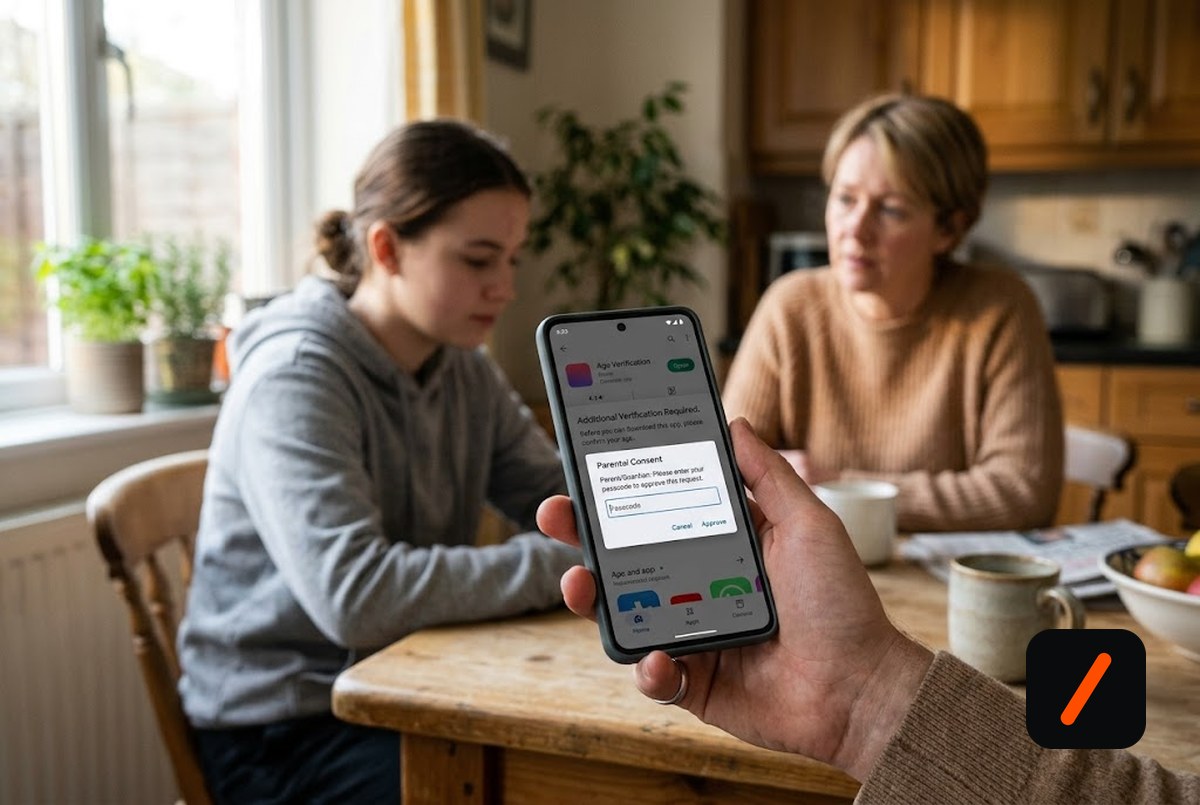
A US House subcommittee is advancing 19 online-safety bills, including a revived Kids Online Safety Act and a sweeping plan to push age verification and parental consent down to the app store, which would reshape how everyone accesses the internet.
 Internet
Cloudflare says 52% of crawler traffic is AI training
Cloudflare's new bot report finds 52% of crawler requests now go to AI training as of June 2026, up from 22% a year earlier. The old web bargain, content for referral traffic, is breaking, and Cloudflare argues the internet needs new plumbing for permissions, licensing and payment.
 Internet
Exam Shutdowns Now Top Cause of Internet Outages
A Q2 2026 outage review found deliberate exam-season internet shutdowns overtook power failures as the leading cause of major disruptions, a shift from accidental to intentional outages.
 Internet
Antitrust Bill Returns to Ban Platform Self-Preferencing
A bipartisan group reintroduced the American Innovation and Choice Online Act, which would bar dominant platforms from self-preferencing their own products and blocking data portability.
 Internet
Iran’s Internet Flickers Back On After a 3-Month Blackout
Cloudflare Radar data shows Iran’s internet partially returning nearly three months after a nationwide shutdown, with traffic and DNS queries rising to only about 40% of pre-blackout levels, a case study in how national connectivity is switched off and measured.
 Internet
WebGPU Hits Every Browser and Runs AI in the Tab
WebGPU now ships in Chrome, Firefox, and Safari, reaching about 82% of users. Its compute shaders deliver roughly 15x gains over WebGL on heavy workloads and let large language models run entirely in a browser tab, no server round-trip.
 Internet
Chrome Moves to a Two-Week Stable Release Cadence
Google is halving Chrome's stable release interval to two weeks starting with Chrome 153 on September 8, 2026, a change designed to shrink the dangerous window between a browser bug becoming public and a fix reaching the billions of people running Chrome.
 Internet
Interop 2026 Brings View Transitions to Browsers
The Interop 2026 project has landed cross-browser baseline support for View Transitions, the Popover API, WebGPU, and CSS anchor positioning, closing long-standing gaps between Chrome, Safari, Firefox, and Edge.
 Internet
WebMCP Wants to Turn Every Website Into an Agent Tool
WebMCP is a proposed open web standard, unveiled at Google I/O 2026, that lets a website expose structured tools, JavaScript functions and HTML forms, directly to browser-based AI agents. Instead of an agent guessing its way through your UI by clicking pixels, the site hands it a documented set of actions to call.
 Internet
WebAssembly's JSPI Finally Closes the Async Gap
WebAssembly's new JSPI lets Wasm code written with blocking calls run against the browser's async world by suspending and resuming around a Promise, so huge C, C++ and Rust codebases can be ported to the web without a rewrite. It is a focus of Interop 2026 and ships in Safari 27.
 Internet
Chrome 150 Ships HTML-in-Canvas and Declarative Updates
Chrome 150, stable since June 30, ships new declarative rendering APIs including HTML-in-Canvas and Declarative Partial Updates, plus a Soft Navigations API that finally brings Core Web Vitals measurement to single-page apps.
 Internet
Firefox ships an AI kill switch to turn off every AI feature
Firefox 148 ships a global AI kill switch that disables every current and future AI feature in one click, plus individual toggles for translations, PDF alt text, AI tab grouping, link previews and the sidebar chatbot. It is Mozilla's answer to a user backlash over the browser's AI push, and the clearest anti-agentic stance in the browser wars.
 Internet
AI Browsers Are Coming for Chrome's 90% Grip
Perplexity's Comet went free on every platform in March 2026 while OpenAI's Atlas stays Mac-only, and analysts project AI-native browsers could take 15-20% of the browser market by end of 2026, mostly from Chrome. The real fight is agentic browsing versus incumbents bolting on AI.
 Internet
Manifest V3 Enforcement Reshapes Chrome Ad Blocking
The full 2026 enforcement of Manifest V3 across every Chromium browser has completed the shift away from the old blocking webRequest model, forcing ad blockers onto declarative rules that hand more control over what gets blocked to the browser engine and, through it, to Google.
 Internet
WebGPU Goes Cross-Browser, Unlocking In-Browser AI
WebGPU, the browser API that gives web apps direct GPU access, now works across Chrome, Firefox, Safari and Edge and reaches about 82% of browsers in 2026. It replaces WebGL, adds real compute shaders, and makes in-browser AI inference and console-quality games practical.
 Internet
Interop 2026 Makes Anchor Positioning Work Everywhere
Interop 2026, the joint effort by Apple, Google, Microsoft, Mozilla, Igalia and Bocoup, has shipped baseline cross-browser support for CSS anchor positioning, View Transitions, the Popover API and WebGPU, retiring a stack of JavaScript workarounds.
 Internet
Cloudflare and Browsers Build a Bot-vs-Human Token
Cloudflare, Chrome, Firefox and Edge are jointly building PACT, a privacy-preserving token that lets a browser prove a session is legitimate without revealing identity, a response to bots now making up 58% of web traffic.
 Internet
Ladybird Is Building the First New Browser Engine in Years
Ladybird, a nonprofit browser built on a from-scratch engine that borrows no code from Chromium, WebKit, or Gecko, is targeting a 2026 developer alpha, a rare attempt to break the web's engine monoculture.
 Internet
WebMCP Lets Websites Talk Directly to AI Agents
WebMCP is a proposed W3C standard from Google and Microsoft that lets a website declare structured tools an AI agent can call directly, instead of the agent screenshotting the page and guessing where to click.
 Internet
Chrome Puts an AI Agent at the OS Level on 200 Million Phones
Google is bringing Chrome auto browse to Android at the operating-system level, shipping on the Pixel 10 and Galaxy S26 in late June 2026 with a stated path to 200 million devices by year end. OS-level placement gives the agent power no app has.
 Internet
Amazon vs Perplexity Could Decide If AI Agents Can Shop for You
On June 11, 2026, the Ninth Circuit heard oral arguments in Amazon v. Perplexity, a case over whether an AI agent logging into your account on your behalf violates the 1986 Computer Fraud and Abuse Act. There is no ruling yet, but the outcome will define agent access to the web.
 Internet
Firefox Bets on the Opposite of Everyone Else: an AI Off Switch
Mozilla confirmed Project Nova, Firefox's biggest redesign since 2020, and its standout feature is a single panel that turns off every AI feature at once. In 2026, that is a genuine product position.
 Internet
Google and Microsoft Want to Rewire the Web for AI Agents. The Standard Is Called WebMCP.
At Google I/O, Chrome introduced WebMCP, a proposed standard that lets websites expose structured tools directly to AI agents. It could reshape how the web works, and not every browser is on board.
 Internet
Cloudflare and the Big Browsers Want a Way to Tell Humans From Bots. The Agentic Web Needs It.
Cloudflare, Mozilla, Google, and Microsoft are jointly developing a privacy-preserving protocol to let traffic prove it is not malicious. As AI agents flood the web, the old way of telling humans from bots is breaking.
 Internet
How a CDN Actually Makes the Web Faster
When a website loads quickly from the other side of the planet, a content delivery network is usually the reason. The trick is older than it sounds: keep copies close.
 Internet
The Case for a Smaller, Calmer Web
Against the trend of bloated, attention-hungry pages, a quiet movement argues that the web was better when it was lighter, and tries to build that way.
 Internet
The Slow Death of the Third-Party Cookie
For two decades, a tiny text file followed you across the web and quietly funded much of it. Its long-delayed retirement is reshaping online advertising.
 Internet
IPv6 Is Still Winning in Slow Motion
The internet ran out of addresses years ago. The fix has been rolling out for over two decades, and it's one of the slowest successful migrations in tech history.
 Internet
DNS: The Phone Book That Runs Everything
Every web address you type triggers an invisible lookup so fundamental that when it breaks, the internet appears to vanish. Meet the system most users never notice.
 Internet
What Google's AI Mode Is and How It Changes Search
Google's AI Mode answers your question directly instead of just handing you links. That sounds convenient, and it quietly rewrites the deal the web was built on.
 Internet
What Happens When the Whole Web Trusts One Company
The internet was designed to have no single point of failure. In practice, a handful of providers now sit underneath an enormous share of it.
 Internet
The Fediverse, Explained: Owning Your Social Graph
Imagine email, but for social media: many independent servers that all talk to each other, with no single company in charge. That's the bet behind the fediverse.
 Internet
Why Web Search Feels Worse, and What's Next
A lot of people feel that searching the web isn't as good as it used to be. The frustration is real, and the causes say something about the web's incentives.
 Internet
How Undersea Cables Carry Almost All Your Data
Satellites get the imagination, but the global internet runs along the ocean floor, through cables not much thicker than a garden hose.
 Internet
Net Neutrality: The Fight Over the Internet's Fast Lanes
Few internet policy debates get as heated as net neutrality. Underneath the politics is a simple question: should all data be treated equally?